
Fire Alarm Installation London
A reliable fire alarm system gives people the warning they need to leave a building safely when a fire starts. SafeHome London provides professional fire alarm installation in London for homes, rental properties, HMOs, blocks of flats, offices, shops and other commercial premises. We can help with new systems, replacement alarms, system upgrades and additional detection where an existing setup no longer meets the needs of the property. The right system depends on the building, how it is used, who occupies it and the level of fire risk. We therefore focus on choosing suitable equipment and placing each device where it can provide effective warning.
Fire Alarm Installation
£220 Per Alarm
Complete Fire Alarm Installation for London Properties
A fire alarm system should provide clear warning throughout the parts of a building where people may be at risk. The right design depends on the property size, number of floors, escape routes, occupancy and existing fire-safety arrangements. SafeHome London provides fire alarm installation for both new and existing properties across London. For landlords, businesses and property managers searching for fire alarm installation near me, we can design and install new systems, upgrade older alarms, add missing detection and replace equipment that is no longer suitable. Depending on the property, the system may include smoke detectors, heat detectors, carbon monoxide alarms, interlinked alarms or a larger panel-based system. Detector type and position are chosen carefully to improve safety and reduce unwanted alarms. Existing systems can also be reviewed where coverage is limited, equipment is outdated or the building layout has changed. Where possible, we assess what can be retained before recommending full replacement.
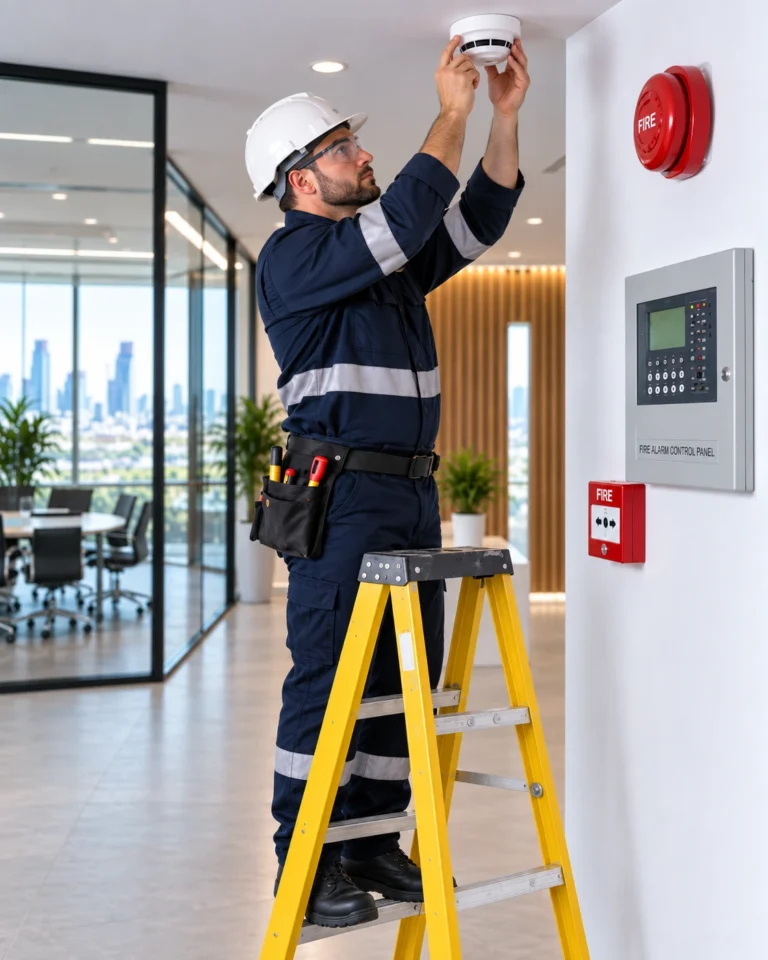
Choosing the Right Fire Alarm System
No single fire alarm system suits every property. The right choice depends on the building size, layout, occupancy, fire risk and how the premises are used.
Conventional Systems: Conventional systems divide a building into zones. When an alarm activates, the control panel shows the affected zone, making them suitable for many smaller commercial properties.
Addressable Systems: Addressable systems identify the exact detector or call point that has activated. They are often better suited to larger or more complex buildings.
Wireless & Hybrid Systems: Wireless systems reduce the need for new cabling, while hybrid systems combine wired and wireless devices. They can be useful where installation access is difficult or disruption needs to be limited.
Specialist Detection: Some properties may need specialist detection due to high ceilings, large open spaces, sensitive equipment or specific fire risks.
Choosing the Right System: The final design should consider: property size and layout, number of floors, escape routes, occupancy, higher-risk areas, existing fire precautions, fire risk assessment, legal or licensing needs. A site assessment helps ensure the system is suitable for the actual property and level of risk.
Fire Alarm Installation for Homes, Landlords and HMOs
Residential fire detection can range from a small set of domestic alarms to a more complex system serving several floors or occupancy areas. The correct arrangement depends greatly on the type of property.
Fire Alarm Systems for Houses and Flats: Homes may require smoke alarms in circulation spaces, heat detection in kitchens and additional detection where the layout or level of risk requires it. Interlinked alarms can help provide warning throughout the home. We can assess existing alarms and advise whether replacement, additional detection or a different system would be more suitable.
Fire Alarm Installation for Rental Properties: Landlords have specific responsibilities for alarm provision in rented homes. In England, relevant landlords must ensure there is at least one smoke alarm on each storey containing living accommodation. Carbon monoxide alarms are also required in rooms used as living accommodation that contain a fixed combustion appliance, except a gas cooker. Prescribed alarms must also be checked on the day a new tenancy begins.
Fire Alarm Systems for HMOs: Houses in multiple occupation can require more detailed fire detection because several people may live independently within the same building. Factors such as the number of storeys, property layout, cooking facilities, escape routes, tenancy arrangement and local licensing requirements can all affect the appropriate system. Some HMOs may use domestic Grade D detection, while more complex properties may need Grade A equipment or a combination of systems.
Detection for Blocks of Flats and Communal Areas: Fire alarm design in blocks of flats requires particular care. Installing communal detection throughout a block is not automatically the correct solution for every building. BSI notes that BS 5839-6 includes a recommendation that communal fire alarm systems should not normally be installed in purpose-built blocks of flats, so the building’s fire strategy and construction must be understood before changes are made.
Fire Alarm Solutions for Managing Agents and Property Managers: Managing agents often need to coordinate alarm work across occupied buildings. We can help by providing a clear scope covering the areas to be inspected, equipment proposed, access requirements and work required.
Systems for Residential Portfolios and Multiple Properties: Where a landlord or managing agent is responsible for several properties, using a consistent approach can simplify future testing and maintenance. Each property still needs to be assessed on its own circumstances, but equipment choice, documentation and maintenance planning can often be standardised where appropriate.
Our Process
Our streamlined process makes it easy to keep your property safe, compliant, and fully certified from start to finish.
Assess the Property
We review the property layout, occupancy, escape routes, existing alarm system and any known fire-safety concerns. This helps us understand what level of detection and protection may be required.
Plan the System
We choose the suitable alarm type, detector locations, sounders and control equipment based on the property and level of risk. A clear scope of work is then prepared before installation begins.
Install and Test
The agreed fire alarm equipment is installed in the planned positions with minimal disruption where possible. Once fitted, the system is tested to check that detectors, sounders, call points and other key components operate correctly.
Commission and Certify
After testing, the system is commissioned and the completed work is reviewed. Relevant installation and commissioning documentation can then be provided, along with basic guidance on system use, testing and future maintenance.
Commercial Fire Alarm Installation for London Businesses
Commercial fire alarm systems should provide suitable warning for the people who use the building. GOV.UK guidance states that workplaces must have a fire detection and warning system, with the type of detection depending on the building and the work taking place there. We install systems for a range of commercial and non-domestic premises.
Offices and Corporate Premises: Office systems may include smoke detection, manual call points, sounders and a control panel. The design should account for meeting rooms, open-plan spaces, kitchens, plant areas, storage rooms and escape routes. Multi-floor offices may also require clear zoning or addressable devices to help identify where an alarm has started.
Shops and Retail Properties: Retail premises may have public areas, stock rooms, staff areas and electrical equipment within the same building. Detection should consider both customer safety and areas where a fire might develop without being noticed straight away.
Restaurants, Cafés and Hospitality Premises: Hospitality buildings often contain different risks within a small area. Smoke detection may suit dining or circulation spaces, while heat detection is often more practical in kitchens where steam and cooking fumes may otherwise create unwanted alarms. The system should also consider staff areas, stores and escape routes.
Hotels and Guest Accommodation: Buildings where people sleep need careful fire-alarm planning because occupants may be unfamiliar with the building and asleep when a fire begins. Room layout, corridors, staircases, alarm audibility and the fire-safety strategy are important parts of the design.
Schools, Nurseries and Educational Buildings: Education premises can include classrooms, halls, kitchens, laboratories, offices, storage rooms and plant areas. The system should support the building’s evacuation arrangements and provide clear warning across areas that may be occupied by different age groups.
Care Homes and Healthcare Premises: Care and healthcare settings can involve occupants who need help to evacuate. Fire detection should therefore be considered as part of a wider fire-safety plan that accounts for the needs of residents, patients, staff and visitors.
Warehouses and Industrial Buildings: Warehouses may have large open spaces, high ceilings, machinery, storage areas and varying fire loads. Detector choice and positioning may therefore differ from a normal office installation. A site assessment is especially important where the environment could affect detector performance.
Fire Alarm Compliance and UK Safety Standards
A fire alarm system should be suitable for the building and installed, tested and maintained in line with the relevant safety requirements. For non-domestic premises, BS 5839-1:2025 covers the design, installation, commissioning and maintenance of fire detection and alarm systems. For homes and other domestic premises, BS 5839-6:2019+A1:2020 provides guidance on alarm grades, categories, detector positioning, power supplies and testing. The Regulatory Reform (Fire Safety) Order 2005 places fire-safety duties on the Responsible Person for many workplaces and non-domestic premises. This can include employers, landlords, owners, occupiers or managing agents.
Keeping Your Fire Alarm System Safe After Installation
A fire alarm system needs regular checks and maintenance to stay reliable after installation. Routine testing helps identify faults before they become a serious problem. Commercial systems should be tested regularly and supported by a fire alarm logbook. This can record weekly checks, faults, false alarms, service visits and any repairs carried out. Professional servicing is also important because some faults are not easy to spot during normal use. A service visit can check detectors, batteries, circuits, control equipment and other key components. Any fault warning should be investigated as soon as possible. Damaged devices, weak batteries or outdated parts may need repair or replacement to keep the system working correctly.
Why Choose SafeHome London for Fire Alarm Installation?
Choosing the right fire alarm installer is about more than fitting equipment. The system should be suitable for the property, installed correctly, tested properly and supported by clear documentation. SafeHome London works with homeowners, landlords, managing agents and businesses across residential and commercial properties. Each system is planned around the building layout, occupancy, escape routes and level of fire risk. Our work follows relevant British Standards, including BS 5839-1:2025 for non-domestic premises and BS 5839-6:2019+A1:2020 for domestic properties where applicable. We provide clear quotations before work begins and can provide relevant installation and commissioning documentation for qualifying work. We can also support ongoing testing, repairs and system upgrades, helping clients manage fire safety through one provider.
10+
Years of Experience
20,000+
Properties Certified
40+
Talented Engineers

Areas We Cover
Central London
North West London
South West London
South East London
North London
West London
South London
East London
Frequently Asked Questions
Do I Legally Need a Fire Alarm System in My Property?
It depends on the type and use of the property. Workplaces and other non-domestic premises need suitable fire detection and warning arrangements based on their fire risk. Relevant rented homes also have specific smoke and carbon monoxide alarm requirements. A fire risk assessment, housing rules or licence conditions may require more than the basic minimum.
Which Fire Alarm Grade or Category Does My Property Need?
The answer depends on the building. Property type, layout, occupancy, sleeping risk, escape routes and fire risk assessment can all affect the required grade or category. A site-specific assessment is more reliable than selecting a grade from a generic online list.
What Is the Difference Between BS 5839-1 and BS 5839-6?
BS 5839-1:2025 covers the design, installation, commissioning and maintenance of fire detection and alarm systems in non-domestic premises. BS 5839-6:2019+A1:2020 covers systems in domestic premises. The correct standard depends on the property and system being considered.
Are Wireless Fire Alarm Systems Compliant?
Wireless systems can form part of a suitable fire alarm installation when the equipment, design, installation and maintenance meet the requirements that apply to the building. Wireless does not automatically mean lower quality. The system still needs suitable coverage, reliable communication and ongoing maintenance.
How Long Does Fire Alarm Installation Take?
Installation time depends on the number of devices, system type, wiring requirements, access and size of the building. A small domestic installation may be relatively straightforward, while a larger commercial project can require several stages. We can provide a clearer time estimate after reviewing the scope.
Will I Receive a Fire Alarm Certificate After Installation?
Relevant installation or commissioning documentation can be provided for qualifying work. The exact documents depend on the type of system and work completed. It is important that the paperwork accurately describes what has been designed, installed or commissioned.
Can an Existing Fire Alarm System Be Upgraded Instead of Replaced?
Often, yes. If the existing panel and equipment remain suitable and compatible, additional detection or other improvements may be possible. Where equipment is obsolete, unreliable or unsuitable, replacement may be the better long-term option.
Accreditations