
Commercial EICR Testing & Certification
Every year, electrical faults cause thousands of workplace fires and power-related accidents in the UK. To reduce these risks, property owners and businesses are legally required to perform regular Electrical Installation Condition Reports (EICRs).
At Safehome London, we provide professional EICR testing and electrical safety certificates across London for commercial EICR clients. This guide explains everything you need to know about who is responsible for commercial property EICRs, how much an EICR costs, and how to stay compliant in 2025.
Our Story
What is a Commercial EICR?
A Commercial EICR (Electrical Installation Condition Report) is a professional inspection that checks the safety of all fixed electrical installations in a commercial building.
It ensures your electrical systems meet the latest BS 7671 Wiring Regulations and helps identify defects, deterioration, and potential safety hazards.
A Commercial EICR covers:
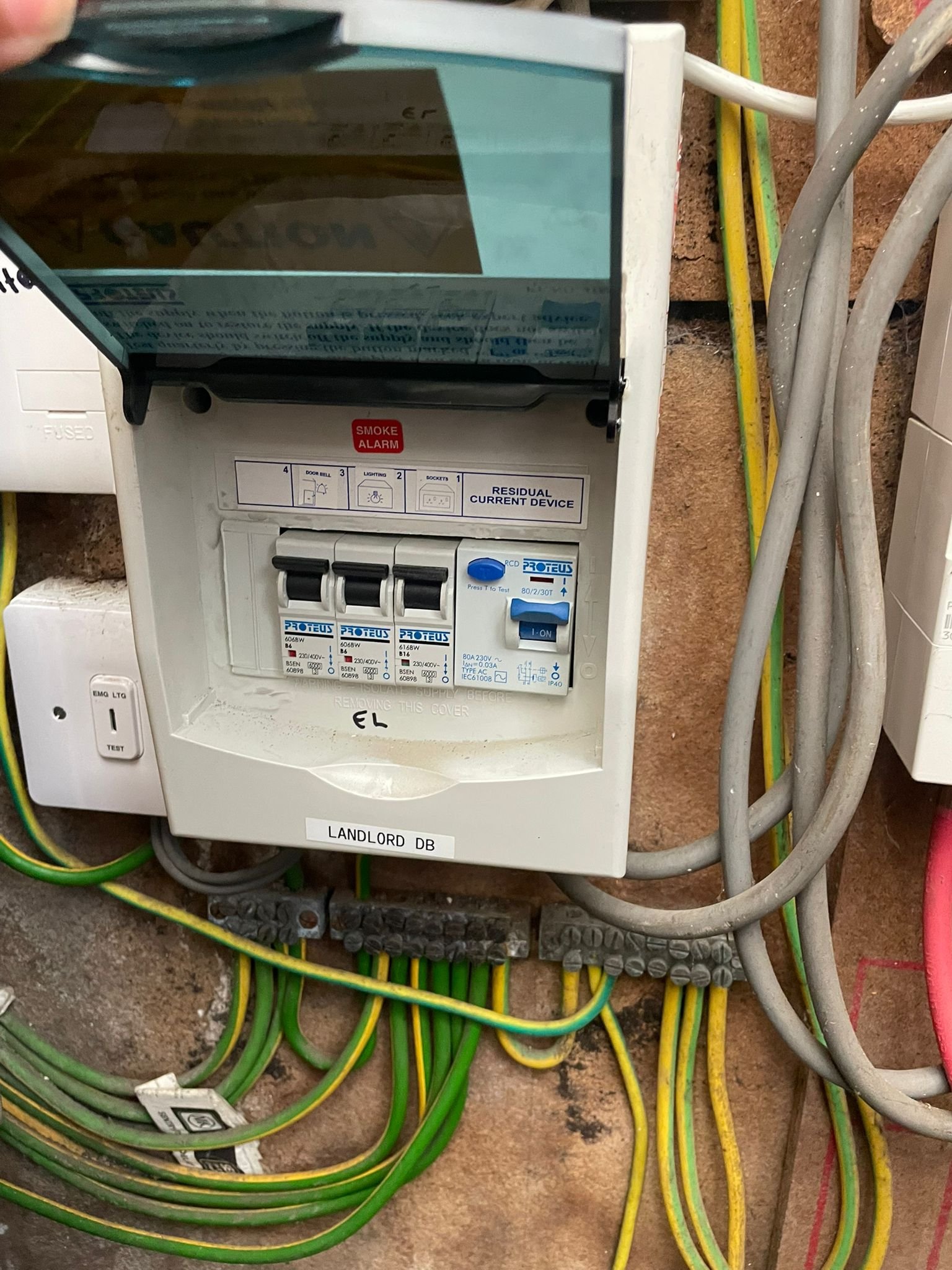
Distribution boards and consumer units
Lighting and power circuits
Earthing and bonding
Machinery connections and switchgear
Unlike residential properties, commercial buildings usually have higher voltage demands, complex networks, and three-phase power — making professional inspection even more critical.
6
Years of experience
3K
Satisfied clients around the UK
642
Project completed
Who Is Responsible for a Commercial Property EICR?
Responsibility depends on who controls or owns the electrical systems in the building. Landlords: Responsible for the main electrical infrastructure, including wiring and fixed installations. Tenants: Accountable for any electrical systems or alterations installed after taking the lease. Property Managers: May be assigned to arrange inspections and ensure documentation is up to date. For example, if a landlord leases an office to a company, the landlord must provide a valid EICR for the fixed installation, while the tenant must ensure any new systems (like air conditioning or IT equipment) are safely installed and tested. At Safehome London, we help both landlords and tenants meet these requirements quickly and efficiently.
Legal Requirements for EICR in the UK
The Electricity at Work Regulations 1989 and the Health and Safety at Work Act 1974 require all employers and landlords to maintain safe electrical systems. Commercial properties must have an EICR at least every 5 years, or sooner if advised by your electrician. Key regulations include: BS 7671 (IET Wiring Regulations) compliance Electricity at Work Regulations 1989 obligations Insurance requirements for valid EICR certificates Failure to comply can lead to fines up to £30,000, invalid insurance, or even criminal prosecution if negligence leads to injury or fire.
Why an EICR Matters for Commercial Properties
Getting a commercial EICR certificate is more than a legal checkbox — it’s a smart business decision. Benefits include: Ensures compliance with UK law Reduces fire and electrocution risk Protects your employees and visitors Prevents costly downtime from electrical faults Keeps your insurance valid At Safehome London, we’ve seen businesses save thousands in repair costs by detecting issues early through regular EICR testing.
EICR Frequency and When to Test
The frequency of EICR testing depends on the type of property and its usage:
| Property Type | Recommended Frequency | Notes |
|---|---|---|
| Offices | Every 5 years | Standard requirement |
| Shops and Retail | Every 5 years | High public exposure |
| Industrial Units | Every 3 years | Heavy machinery load |
| Schools | Every 5 years | Per local authority |
| Hotels | Every 3 years | High occupancy risk |
| Construction Sites | Every 6 months | Temporary installations |
Need to know your property’s schedule? Safehome London can create a maintenance plan to keep you compliant year-round.
What Does an EICR Include?
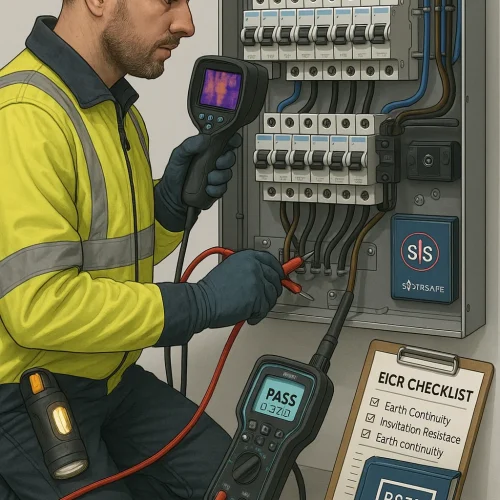
An EICR inspection involves both visual and electrical testing:
Checking for damaged or outdated wiring
Verifying circuit protection devices
Testing earthing and bonding continuity
Measuring insulation resistance
Identifying overheating components
After the test, you’ll receive a detailed EICR report with any issues marked as:
C1: Danger present — immediate action required
C2: Potentially dangerous — urgent attention advised
C3: Improvement recommended
FI: Further investigation required
How Much Does a Commercial EICR Cost in London?
EICR prices vary based on building size, circuit numbers, and accessibility.
| Property Type | Average Cost | Notes |
|---|---|---|
| Small Office | £150 – £250 | 10–15 circuits |
| Medium Shop or Unit | £300 – £500 | Up to 25 circuits |
| Large Commercial Building | £600 – £1,000+ | Complex systems |
| Industrial Site | £700 – £1,500+ | Three-phase testing |
At Safehome London, we offer transparent pricing and no hidden fees. All inspections are performed by NICEIC-approved electricians.
EICR Cost for 3-Bed House
Although our focus is commercial, many clients request EICRs for mixed-use or rental properties.
In London, the EICR cost for a 3-bed house typically ranges between £120–£180.
This helps landlords comply with the Electrical Safety Standards in the Private Rented Sector (England) Regulations 2020.
EICR Certificate Cost
Once your inspection passes, Safehome London provides a digital EICR certificate at no extra cost.
The certificate confirms your installation’s safety and compliance.
Validity:
Commercial properties: Up to 5 years
Residential properties: 5 years or at tenancy change
Keep your certificate for insurance and record-keeping — it’s your proof of compliance.
Periodic Electrical Inspection Explained
A Periodic Electrical Inspection is a proactive approach to maintaining safety.
It includes:
Testing all circuits
Checking protective devices
Inspecting distribution boards
Reviewing previous EICR results
These inspections help prevent breakdowns, electrical fires, and ensure ongoing compliance.
EICR Testing Process
Safehome London’s EICR testing follows strict UK standards:
Pre-Inspection Survey: Assess building layout and access points.
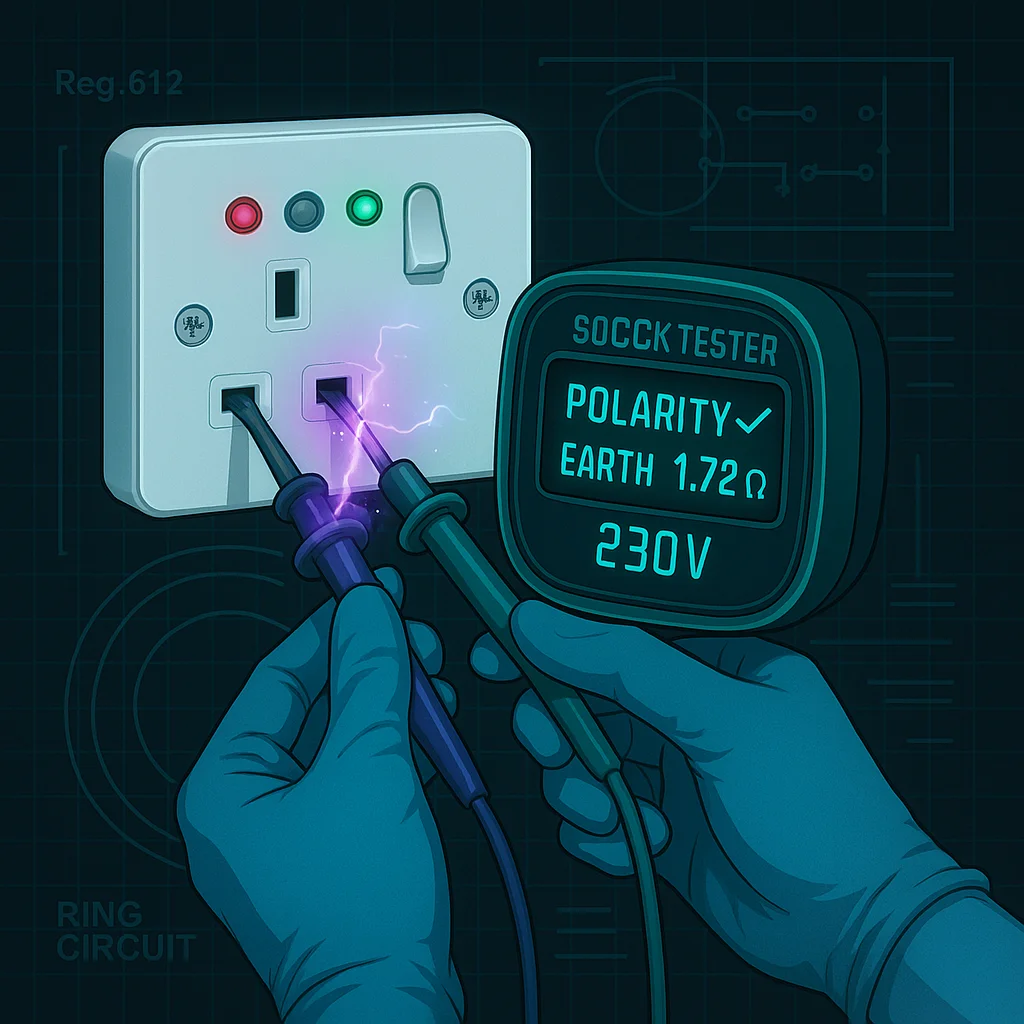
Testing: Measure continuity, insulation, polarity, and earth loop impedance.
Documentation: Record findings with code recommendations.
Reporting: Provide digital EICR report and safety certificate.
Repairs (if needed): Quick remedial work for C1 or C2 issues.
We minimize disruption and schedule tests during off-peak hours for your convenience.
Choosing Safehome London for EICR Services
Why choose Safehome London?
✅ Fully NICEIC-approved electricians
✅ Competitive, transparent pricing
✅ Serving all areas of London
✅ Fast turnaround on reports
✅ 24/7 emergency support
We specialize in commercial EICRs, residential safety certificates, PAT testing, and fire risk assessments, providing total compliance solutions.
Common EICR Codes Explained
| Code | Meaning | Action |
|---|---|---|
| C1 | Immediate danger | Disconnect and repair immediately |
| C2 | Potential danger | Fix urgently |
| C3 | Improvement recommended | Schedule when possible |
| FI | Further investigation | Needs more testing |
Our electricians will explain each code clearly and provide a quote for any necessary remedial work.
Conclusion
An EICR is more than a safety document — it’s a vital part of protecting your property, people, and reputation.
At Safehome London, we make electrical compliance simple and affordable. Whether you manage offices, retail stores, or industrial units, our certified electricians deliver reliable EICR testing across London.
📞 Call Safehome London: 020 4628 6560
✉️ Email: info@safehomelondon.co.uk
🌐 Visit: https://safehomelondon.co.uk/
Stay compliant. Stay safe. Stay powered with Safehome London.