Residential Fire Risk Assessment London
SafeHome London provides professional residential fire risk assessments in London for landlords, freeholders, managing agents, property managers and other people responsible for residential buildings. Our aim is simple: identify fire risks, explain what needs attention and give you a clear plan for improving safety. A suitable fire risk assessment can help you: identify fire hazards before they become serious problems, check whether escape routes and fire precautions are suitable, understand problems with fire doors and compartmentation, review alarms, emergency lighting and other fire safety measures, meet your duties as a Responsible Person, create a clear record of findings and actions, plan remedial work in order of priority.
What is a Residential Fire Risk Assessment?
A residential fire risk assessment is a detailed review of the fire risks within a residential building. It looks at how a fire could start, who may be at risk, how people would escape and whether suitable fire safety measures are already in place. For landlords, freeholders, managing agents and property managers searching for a residential fire risk assessment near me, a professional assessment can help identify fire safety issues and provide clear actions to reduce risk. The assessment may cover fire doors, escape routes, alarms, emergency lighting, fire stopping, combustible materials and fire safety management. It can also identify issues such as blocked escape routes, damaged fire doors, poor compartmentation or missing maintenance records. The aim is to highlight potential problems and provide clear, practical actions to improve safety.
When Is a Residential Fire Risk Assessment Legally Required?
Not every private home needs a separate fire risk assessment. The legal requirement depends on the type of building and which areas fall under fire safety law. In blocks of flats and other multi-occupied residential buildings, the Fire Safety Order mainly applies to common areas, while the Fire Safety Act 2021 also covers the building structure, external walls and flat entrance doors.
Common Areas: Common areas can include shared entrances, corridors, staircases, landings, communal lobbies, service areas, meter cupboards, plant rooms and refuse areas. Where the Fire Safety Order applies, the Responsible Person must arrange a suitable and sufficient fire risk assessment.
Structure and External Areas: The assessment can also cover relevant parts of the building structure, external walls, cladding, balconies and flat entrance doors. A standard FRA does not always involve opening up hidden parts of the building. If deeper investigation is needed, the assessor may recommend a separate intrusive or specialist survey.
Private Flats and Shared Areas: The inside of a private flat is not normally treated in the same way as communal areas under the Fire Safety Order. This means landlords and managing agents should not assume that every flat needs its own separate FRA. The correct scope depends on the property type, occupancy, legal duties and level of risk.
When an FRA Should Be Reviewed: An existing fire risk assessment should be reviewed when significant changes could affect fire safety, such as refurbishment, layout changes, new flats, changes in use, new building services, replacement doors or changes to escape routes. There is no single fixed review period for every building. The assessment should be kept up to date and reviewed when it may no longer reflect the actual risks.
Our Process
Our streamlined process makes it easy to keep your property safe, compliant, and fully certified from start to finish.
Confirm Property Details
Share the property type, size, number of floors and any known concerns. We confirm the scope and arrange the visit.
Inspect the Property
Our assessor checks the relevant areas, including escape routes, fire doors, communal spaces and existing fire safety measures.
Assess the Findings
We review the risks, existing controls and any issues that need attention, then prepare a clear report with prioritised recommendations.
Plan the Next Steps
If further work is needed, we explain the recommendations and can help arrange suitable inspections, maintenance or remedial works.
Residential Fire Risk Assessment Requirements and UK Fire Safety Law
Residential fire safety in England is supported by several pieces of legislation and guidance. The exact requirements depend on the building.
Regulatory Reform (Fire Safety) Order 2005: The Regulatory Reform (Fire Safety) Order 2005 is the main legal framework for fire safety in premises within its scope. It requires the Responsible Person to assess fire risks and take suitable general fire precautions. A fire risk assessment should identify: fire hazards, people at risk, measures needed to remove or reduce risk, findings and fire safety arrangements, when the assessment needs review. These steps are also reflected in current government guidance.
Fire Safety Act 2021: The Fire Safety Act 2021 clarified the parts of a multi-occupied residential building that fall within the Fire Safety Order. This includes the: structure, external walls, cladding, balconies, flat entrance doors between domestic premises and common parts. These areas must be taken into account when the fire risk assessment is carried out.
Fire Safety (England) Regulations 2022: The Fire Safety (England) Regulations 2022 introduced further duties for multi-occupied residential buildings in England. The exact duties vary according to building height. For example, in residential buildings with storeys above 11 metres, Responsible Persons must undertake annual checks of flat entrance doors and quarterly checks of fire doors in common parts. High-rise residential buildings have further requirements relating to matters such as building plans, external wall information, secure information boxes, wayfinding signage and checks of certain firefighting equipment. All multi-occupied residential buildings covered by the relevant regulations also have duties around providing residents with fire safety instructions and information about fire doors.
BS 9792:2025 Fire Risk Assessment for Housing: BS 9792:2025 is the current British Standard code of practice for fire risk assessment in housing. It was published in August 2025 and replaced the withdrawn PAS 79-2:2020 approach. The standard provides recommendations for carrying out and recording structured, risk-based fire risk assessments in housing premises. SafeHome London takes current legislation, relevant guidance and the needs of the individual building into account when determining assessment scope.
What Happens If the Fire Risk Assessment Identifies Problems?
If problems are found, the report will explain what needs attention and how urgent each action is. Some issues may need quick action, while others can be planned as part of ongoing maintenance.
Priority Actions: Higher-risk issues should be addressed first, while lower-risk improvements can be planned over time.
Urgent vs Planned Work: The report helps separate immediate safety concerns from routine or longer-term improvements.
Fire Door Repairs: Defective fire doors may need adjustment, new seals, closers, frame repairs or full replacement where necessary.
Fire Alarm Upgrades: Recommendations may include alarm testing, repairs, extra detectors or system upgrades.
Emergency Lighting: Failed or inadequate emergency lighting and signage may need repair, replacement or improvement.
Fire Stopping: Gaps in fire-resistant walls or floors may require fire stopping. More complex issues may need further investigation.
Remedial Works: SafeHome London can help arrange suitable remedial work after the assessment, with any additional services quoted separately.
Residential Fire Risk Assessment for Landlords and Rental Properties
Landlords can have several fire safety duties depending on the type of property they own and the areas they control. A single private dwelling is different from a block of flats, HMO or other multi-occupied property with shared areas, so the correct fire safety approach should always reflect the building itself. In multi-occupied rental properties, a fire risk assessment may consider shared escape routes, fire doors, alarm systems, compartmentation, resident information and the way fire safety is managed. The assessment should reflect the actual layout, occupancy and risks within the building. Good record keeping is also important. Landlords should keep clear evidence of inspections, repairs, servicing, testing, resident information and completed actions. The full fire risk assessment and relevant fire safety arrangements should also be properly recorded. For landlords managing several properties, organised records make it easier to track assessment dates, review dates, outstanding actions, completed works and supporting certificates. This helps reduce the chance of important fire safety actions being missed.
Why Choose SafeHome London for Your Residential Fire Risk Assessment?
SafeHome London provides clear, property-specific fire risk assessments for landlords, freeholders, managing agents and property managers across London. We assess the actual building, its layout, occupancy and existing fire safety measures rather than relying on a generic checklist. Our reports explain what was found, why it matters and what action may be needed. If further work is required, we can also help with related services such as fire doors, alarms, emergency lighting and other fire safety remedial works.
Related Fire Safety Services for Residential Properties
A fire risk assessment may identify areas that need further inspection, testing or remedial work. SafeHome London can help with related services such as fire door repairs, fire alarm testing and installation, emergency lighting, fire extinguisher servicing and fire stopping. Where needed, we can also support asbestos survey work in older residential buildings, helping landlords and property managers manage several compliance needs more efficiently.
10+
Years of Experience
20,000+
Properties Certified
40+
Talented Engineers
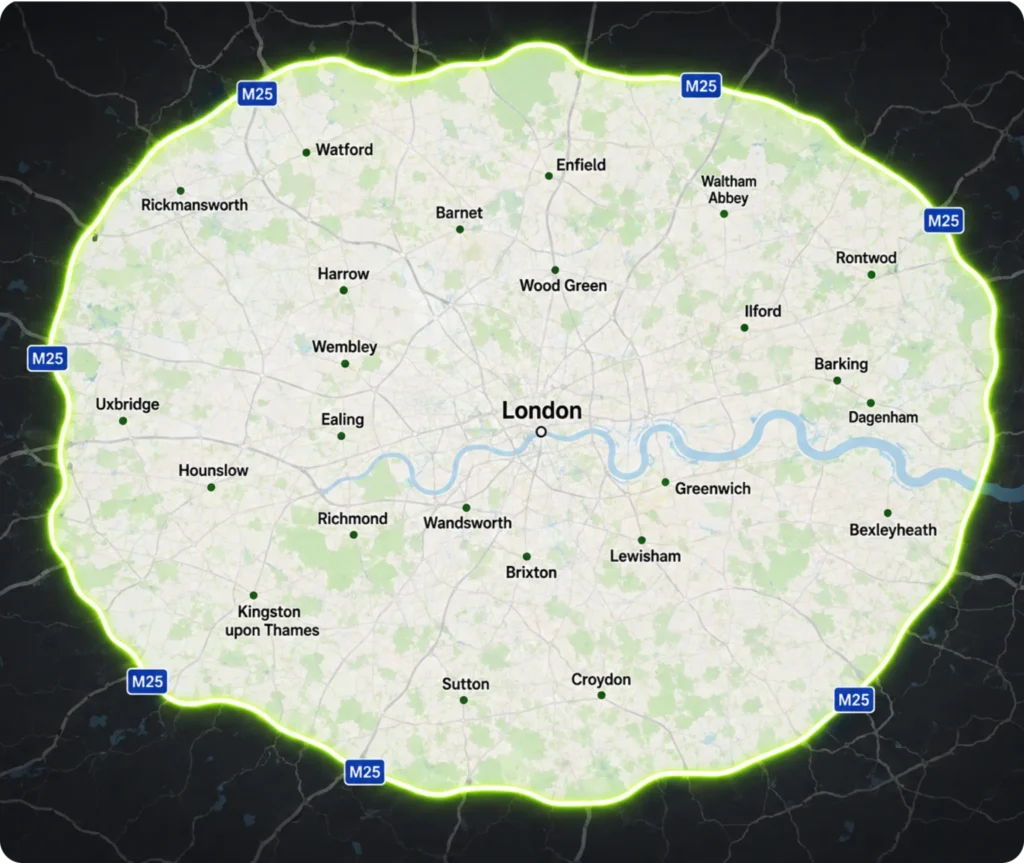
Areas We Cover
Central London
North West London
South West London
South East London
North London
West London
South London
East London
Frequently Asked Questions
Do All Residential Properties Need a Fire Risk Assessment?
No, A normal private home does not automatically require a statutory FRA under the Fire Safety Order. The position is different for buildings such as blocks of flats and other multi-occupied residential premises with common parts. In these buildings, the Responsible Person has legal fire safety duties for the areas within scope.
Do Individual Flats Need Their Own Fire Risk Assessment?
Usually, the statutory FRA for a block is not simply a separate assessment of the inside of every private flat. The common parts, structure, external walls and flat entrance doors are important parts of the legal scope. Some wider assessment types may include access to flats where the building and agreed scope justify it.
Who Is Responsible for a Fire Risk Assessment in a Block of Flats?
It is usually the person or organisation that controls the relevant parts of the building. This may be the: freeholder;landlord;, managing agent, residents’ management company, housing provider. The exact position depends on the management arrangements.
Does a Landlord Need a Fire Risk Assessment for a Rental Property?
It depends on the property. A landlord responsible for a block of flats, HMO or another property with common parts may have duties under fire safety law. A simple single private dwelling is not automatically treated in the same way.
Do HMOs Need a Residential Fire Risk Assessment?
HMOs can fall within fire safety legislation, particularly in relation to shared and common areas. They may also be subject to housing and licensing requirements. Because HMO layouts and occupancy vary widely, the correct fire safety measures should be determined for the actual property.
Are Flat Entrance Doors Included in a Fire Risk Assessment?
Yes, where a flat entrance door sits between a domestic dwelling and common parts, it falls within the scope clarified by the Fire Safety Act 2021. A general FRA may inspect doors at an assessment level. A detailed fire door inspection may still be recommended separately.
How Often Should a Fire Risk Assessment Be Reviewed?
The law does not set one fixed interval for every building. The FRA must be reviewed regularly and when there is reason to think it is no longer valid or there has been a significant change. For small and simple premises, annual review is recognised in government guidance as good practice, but the right frequency depends on the risk.
Do I Receive a Fire Risk Assessment Certificate or a Report?
The important document is the fire risk assessment report and record. The law requires the assessment and findings to be recorded in full. A fire risk assessment is therefore more than a simple pass-or-fail certificate.
Accreditations