Commercial Gas Safety Certificate London
Safe Home London provides professional commercial gas safety inspections and certification across London for restaurants, cafés, offices, shops and other business premises. Our Gas Safe registered engineers can inspect gas appliances, pipework, flues, ventilation and safety controls. Depending on your premises, we can provide the relevant commercial gas documentation, including CP42 or CP17 records. With Safe Home London, you benefit from: Qualified commercial gas engineers, Clear inspection results, Reliable gas safety documentation, Support for commercial kitchens and businesses, London-wide appointments
Fire Safety
Details →
Gas Safety
Details →
EPC
Details →
FRA
Details →
Asbestos Survey
Details →
Legionella Risk Assessment
Details →
Commercial Gas Safety Certification for London Businesses
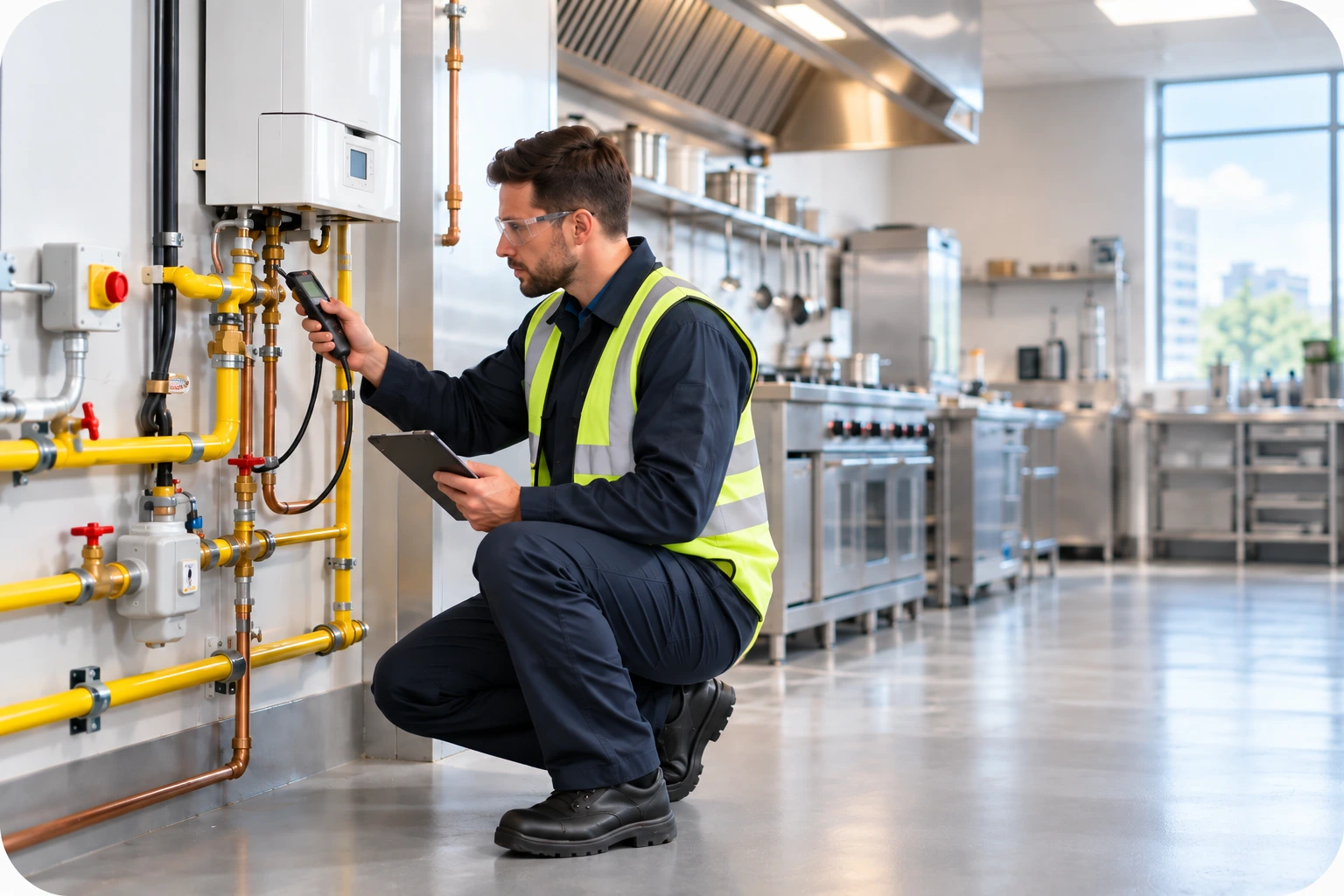
Commercial gas systems must be kept safe and properly maintained. Faults in boilers, cookers, pipework or flues can create risks such as gas leaks, fire and carbon monoxide exposure. Safe Home London provides commercial gas safety inspections across London for businesses, landlords and property managers. Checks can include appliances, pipework, gas tightness, flues, ventilation, safety controls and commercial kitchen interlocks where relevant. For catering premises such as restaurants, cafés, takeaways and hotels, a CP42 gas safety record may be required. Commercial gas records are different from domestic CP12 certificates and must be completed by an engineer with the correct Gas Safe qualifications. The exact certificate depends on the property, appliances and type of gas installation. If you are unsure which record you need, Safe Home London can help identify the correct service before booking.
Commercial Gas Safety Responsibilities and UK Compliance
Commercial gas safety is about keeping gas systems safe for staff, customers, tenants and visitors. The exact duties depend on who controls the property, equipment and lease responsibilities.
Gas Safe Engineers: Commercial gas work must be carried out by a suitably qualified Gas Safe registered engineer. The engineer should also hold the correct competency for the equipment being inspected, such as commercial catering or heating systems.
Inspection Frequency: Commercial gas systems should be inspected and maintained at suitable intervals. The correct frequency may depend on: Appliance type, Manufacturer guidance, Usage, Installation condition, Engineer advice, Insurance or lease requirements
Gas Safety Records: Keep clear records of inspections, servicing, repairs and previous defects. For businesses with several sites, a central record can help make sure future inspections and maintenance are not missed.
Our Process
Our streamlined process makes it easy to keep your property safe, compliant, and fully certified from start to finish.
Share Property Details
Send us the property address, business type, gas appliance details and any access requirements. Previous certificates or appliance photos can also help us confirm the correct service.
Book the Inspection
Once the scope is confirmed, we arrange a suitable appointment around your business hours. Please let us know about parking, security or restricted access in advance.
Inspect and Test
Our engineer checks the relevant gas appliances and installation, completes the required tests and records the findings. Any defects or safety concerns are clearly explained.
Receive Your Documentation
After the inspection, we prepare the relevant commercial gas safety record with the test results, findings and engineer details. Further testing may be needed if remedial work is required.
Types of Commercial Gas Certificates and Safety Documentation
Commercial gas work is not covered by one universal certificate. Different records are used for different types of installation, inspection and commissioning work.
Record | Typical Purpose | Common Setting |
CP42 | Commercial catering gas safety | Restaurants, cafés and commercial kitchens |
CP17 | Commercial gas installation record | New or altered commercial gas installations |
CP15 | Plant or appliance commissioning documentation | Commercial boilers and gas-fired plant |
CP16 | Testing and purging documentation | New or modified commercial pipework |
CP44 | Mobile catering gas safety | Food trailers and mobile catering units |
The exact document used can depend on the work, installation and engineer’s certification system.
Commercial Gas Safety Responsibilities and UK Compliance
Commercial gas safety is about keeping gas systems safe for staff, customers, tenants and visitors. The exact duties depend on who controls the property, equipment and lease responsibilities.
Who Is Responsible? Responsibility may sit with the employer, commercial tenant, landlord or managing agent. HSE guidance requires relevant gas appliances, flues, pipework and safety devices to be kept in a safe condition.
Gas Safety Regulations: The Gas Safety (Installation and Use) Regulations 1998 cover the safe installation, maintenance and use of gas systems in relevant premises. They place duties on both those carrying out gas work and those responsible for the installation.
Gas Safe Engineers: Commercial gas work must be carried out by a suitably qualified Gas Safe registered engineer. The engineer should also hold the correct competency for the equipment being inspected, such as commercial catering or heating systems.
Inspection Frequency: Commercial gas systems should be inspected and maintained at suitable intervals. The correct frequency may depend on: Appliance type, Manufacturer guidance, Usage, Installation condition, Engineer advice, Insurance or lease requirements
Gas Safety Records: Keep clear records of inspections, servicing, repairs and previous defects. For businesses with several sites, a central record can help make sure future inspections and maintenance are not missed.
Commercial Properties and Sectors We Support
Safe Home London provides commercial gas safety services for a wide range of businesses and managed properties across London.
Restaurants, Cafés and Takeaways: We inspect commercial catering appliances, gas pipework, ventilation and related systems, with CP42 documentation where required.
Offices and Retail Premises: Offices, shops and other workplaces may use gas for heating, hot water or kitchen facilities. We inspect the relevant appliances and installation.
Hotels and Hospitality: Hotels and hospitality sites may include commercial kitchens, boilers, water heaters and plant rooms. Larger sites may require more than one type of gas inspection.
Schools and Healthcare Premises: We support schools, nurseries, care settings and healthcare premises with gas safety inspections planned around access and operating hours.
Warehouses and Industrial Units: Industrial and warehouse sites may contain gas heaters, boilers or specialist equipment. The inspection is matched to the type of installation.
Landlords and Property Managers: We work with landlords, managing agents and property managers responsible for single units, mixed-use buildings and multi-property portfolios.
Mixed-Use Properties: Buildings with shops, offices, flats or shared heating systems can have more complex gas safety responsibilities. The inspection scope should reflect the property layout, gas systems and management arrangements.
Why Choose Safe Home London for Commercial Gas Safety Certification
Safe Home London works with appropriately qualified Gas Safe registered engineers experienced in commercial gas systems, including restaurants, offices, managed buildings and commercial kitchens. We explain inspection findings clearly, including what was found, why it matters and any action required. Relevant digital certification and documentation can also be provided after qualifying inspections or work. Our pricing is based on the property, appliance details and scope, helping keep quotations clear from the start. We support individual businesses, landlords, managing agents, facilities managers and multi-property portfolios across London.
Commercial Landlord Gas Safety Certificates
Gas safety responsibility in commercial premises can sit with the landlord, tenant, managing agent or more than one party. The lease usually helps define who is responsible for the gas installation and equipment. Commercial landlords and tenants may need suitable gas safety records depending on the appliances, property use and type of inspection. Commercial systems should not automatically be treated like domestic CP12 requirements, especially where catering or specialist gas equipment is installed. For landlords and managing agents with several properties, keeping clear records of inspections, services, defects and repairs can make compliance easier to manage. Safe Home London can also help arrange inspections across multiple sites, taking account of tenant access, opening hours, appliance details and site contacts.
10+
Years of Experience
20,000+
Properties Certified
40+
Talented Engineers

Areas We Cover
Central London
North West London
South West London
South East London
North London
West London
South London
East London
Frequently Asked Questions
What is a commercial gas safety certificate?
It is a record showing that a commercial gas installation or appliance has been inspected. The exact document depends on the premises, equipment and work involved.
What is a CP42 gas certificate?
CP42 is commonly used for commercial catering gas safety checks in places such as restaurants, cafés, takeaways and hotel kitchens.
Is a commercial gas safety certificate a legal requirement?
Commercial gas systems must be kept safe and properly maintained. The exact legal requirement depends on the type of property, gas equipment and who is responsible for it.
How often does a commercial gas safety certificate need to be renewed?
There is no single renewal period for every commercial property. The frequency depends on the equipment, manufacturer guidance, usage and other compliance requirements.
Who can issue a commercial gas safety certificate?
It should be issued by a Gas Safe registered engineer who holds the correct qualifications for the type of commercial gas work being carried out.
Who can issue a commercial gas safety certificate?
It should be issued by a Gas Safe registered engineer who holds the correct qualifications for the type of commercial gas work being carried out.
What does a commercial gas safety inspection include?
Checks may include gas appliances, pipework, gas tightness, ventilation, flues, safety controls, combustion and kitchen interlocks where relevant.
How long does a commercial gas safety inspection take?
The time depends on the number of appliances and the complexity of the installation. Larger commercial sites usually take longer.
How much does a commercial gas safety certificate cost in London?
The cost depends on the certificate type, number of appliances and property setup. Contact Safe Home London for a clear quotation.
What happens if my commercial gas installation fails the inspection?
The engineer will explain the fault and any action required. Unsafe equipment may need to remain out of use until it has been repaired.
Do restaurants need a CP42 gas safety certificate?
Restaurants using commercial gas catering equipment commonly require CP42 gas safety documentation as part of their gas safety management.
Accrediations